Roof Prism vs Porro Prism Binoculars
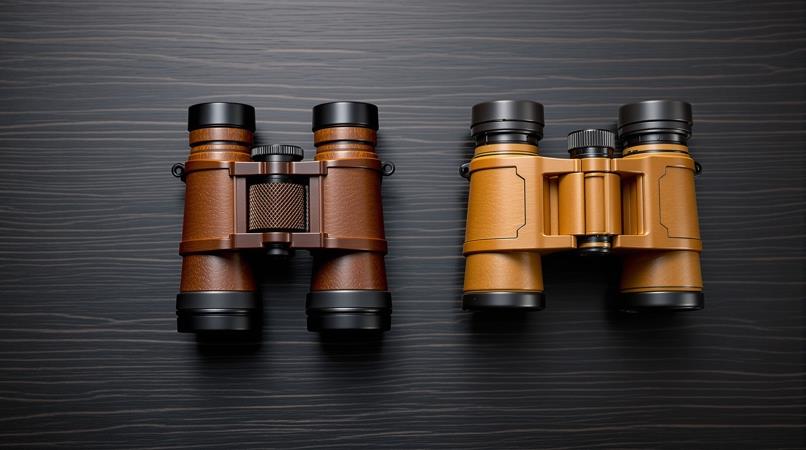
Choosing binoculars is not just about looking at magnification numbers or lens size. The prism layout inside the binoculars plays a role in how the instrument feels how it focuses how much it weighs and how much it costs. Two binoculars might have the specs on paper but they can feel totally different in your hands. Roof and Porro prism designs are both options and neither is better than the other for everyone. This guide breaks down the differences between the two looks at what really matters in low-cost models and gives you practical things to check before you spend your money.
How the Two Prism Layouts Send Light to Your Eyes
Binoculars use prisms to change the path of light. Without prisms binoculars would have to be very long to let you see clearly. The image would look upside down. The prisms fix that by folding the path and correcting the image so you get a right-side-up view even though the eyepieces are close together.
In a Porro prism** design the front lenses are set farther apart than the eyepieces. The light travels in a zigzag pattern through each side. This creates the wider body shape. The front lenses stick out more than the eyepieces at the back.
In a *roof prism** design the objective lenses and eyepieces line up in a straight line. The prisms fold the light inside a body giving the binoculars a slim sleek look. There's often a hinge in the middle so the two barrels can fold together for storage.
The names just describe how the light is bent inside. They don't say anything about quality. A built binocular with either type can give you a clear bright image.. A poorly made one. No matter the prism type. Can leave you disappointed.
Roof Prism Binoculars: Compact Neat, Easy to Carry
The advantage of roof prism binoculars is their slim shape. They are usually narrower easier to fit in a bag and less likely to catch on clothing or straps. That makes them great for travel, casual walks, events and wildlife viewing where fitting the binoculars in your pack matters more than a grip.
The center hinge lets you adjust how apart the eyepieces are. When that adjustment works smoothly and stays set the binoculars feel well-balanced and easy to control. Many people also find the shape more comfortable when holding them up for long periods.
The optical path in roof prisms is harder to build correctly. Without glass and coatings you can get phase shifts and light loss. When shopping look for labels like "fully multi-coated" and "phase-corrected roof prisms." These don't guarantee perfection. If a manufacturer doesn't mention them it's a red flag.
On the end a slim body can hide flaws. The focus wheel might feel loose. The hinge might not stay at the width. The image might start to blur at the edges. Being compact is useful. It's not proof of better brightness or clarity.
Porro Prism Binoculars: Width That Can Bring Optical Value
Porro prism binoculars are wider because the objective lenses are set apart from the eyepieces. That shape lets your hands wrap around the body easily. The space between the lenses often gives a stronger sense of depth in the image. This design has been used for years in birdwatching, astronomy, sports and general outdoor viewing.
For a price Porro models can deliver a clear image without needing the complex prism corrections that roof designs require. They can be very efficient optically. The wider body may also feel steadier for people with hands. The focus wheel is usually between the barrels and easy to reach though how it feels can vary by model.
There are downsides. The binoculars take up room in a bag. The protruding barrels can get in the way when moving through bushes or crowded spaces. The exposed hinges and seams can collect dirt. Show damage more easily. Waterproofing depends more on the model than on the prism type itself.
Some people say Porro designs give depth and a more three-dimensional view.. That's not guaranteed by the prism type. Objective lens spacing, lens quality, alignment and your own eyes all affect how the image feels. Think of the Porro design as a starting point, not a promise of better viewing.
Optical Facts That Matter More Than the Body Shape
The prism type is one piece of the puzzle. Magnification tells you how bigger an object looks. Objective diameter shows the size of the lenses that collect light. Higher magnification can make hand shake more obvious and narrow your view. Larger objectives can help in light but they also make the binoculars bigger and heavier.
Exit pupil is calculated by dividing the diameter by the magnification. For example binoculars marked 8×42 have an exit pupil of 5.25 mm. A larger exit pupil helps you see better in light though your eyes may not use all of that light in bright daylight. It doesn't mean the image is sharper.
Field of view tells you how much of the scene you can see at a given distance. A wider field helps you find a flying bird or track athletes. Check if the manufacturer gives the field of view in degrees or in meters at a distance. These two measurements can't be compared directly without knowing the reference distance.
Coatings are important because every glass surface can reflect some light. "Fully multi-coated" means all key surfaces have layers to reduce reflection. That's a sign but labels alone don't replace testing. Look for a even view with no haze strong color cast or annoying reflections.
Alignment is another issue. If the two images don't match up you might get eye strain or a headache. A small misalignment can be hard to spot in a store. Focus on an object switch which eye you're using and check that the image stays comfortable after a few seconds.
Which Design Suits Your Regular Use?
For hiking and travel roof prism binoculars often make sense when low weight, a slim shape and quick packing are priorities.. If the budget is tight don't go for the smallest model. A larger roof binocular with better correction can be more satisfying than the smallest one you can buy.
For relaxed wildlife watching. From a garden hide or observation point. A Porro model can be a value. Its width is less of an issue when the binoculars stay on a shelf or hang from a strap.
Birdwatchers have to consider a things. A wide field of view helps find birds. Close-focus ability matters for subjects. No prism type guarantees either feature so check the specs and if possible test how the focus moves.
For sports focusing, comfortable eye relief and a view that's easy to find are more important than a slim body. If children or multiple family members will share the binoculars pay attention to hinge adjustment and eye relief. Twist-up eyecups help people who wear glasses. The actual usable eye relief is a model-specific number. A folding roof model might adjust fast. A Porro body might be easier to grip for some.
Common Budget Mistakes and a Sensible Final Check
One common mistake is thinking roof means modern and Porro means old. Another is choosing the magnification you can afford without thinking about hand shake, field of view or comfort. A third is buying a binocular with a list of features but ignoring alignment, hinge movement and the return policy.
Before you buy hold the binoculars as you normally would. Can you reach the focus wheel without shifting your grip? Does the hinge stay where you set it? With glasses on can you see the field without pressing your eyes into the eyecups? Check the image on a high-contrast object then look at a shaded spot to check for glare or uneven brightness.
Choose roof prism binoculars when portability and a slim straight body are more important than everything.. Make sure the manufacturer explains coatings and phase correction clearly. Choose Porro prism binoculars when a wider grip, good value and a relaxed setup matter more, than packing space. No matter which you pick go with the model that gives you a properly aligned view after those simple checks. Not the one whose prism label sounds the most impressive.